Porter Robinson's Nurture: the album that pulled me through thesis crunch and got me hooked on EDM
Listening through all 14 tracks of Porter Robinson's Nurture during a rushed thesis semester: from hating EDM to Mirror and Unfold.
Table of Contents
Stuck in a short semester where my thesis was falling behind fast, I seriously thought sitting in dead silence was the only way to focus. Funny enough, the quieter I made the room, the louder my brain just turned its internal speakers up. Half-overwhelmed and looking for background noise, I clicked play on Porter Robinson’s Nurture on a whim.
From background noise to fill an empty room, Nurture became one of the best uplifting albums I have ever heard. I have been an EDM fan ever since.
Nurture does not try to cheer you up with lines like “keep going, tomorrow will be better.” It worked for me because the songs say the quiet parts out loud: feeling not good enough, falling behind, and worrying that you are wasting your time. Listening to it did not magically erase the workload, though it took away the feeling of having to wrestle all of that noise alone.
How Nurture sounds nothing like the EDM I used to dodge
Before Nurture, I assumed electronic music mostly meant heavy bass drops made to blast at festivals. Listening through this 2021 record changed that quickly: Porter pairs live instruments and outdoor sounds with bright synths, so the production feels airy instead of suffocating.
Behind that sound sits a seven-year stretch after his 2014 debut Worlds, a period where Porter openly talked about stalling out under the pressure to top his earlier work. That bluntness makes the whole record feel personal rather than distant.
Going through all 14 tracks of Nurture in order (1 → 14)
Writing fourteen full paragraphs in a row would get tiring by track four, so I broke the 1 → 14 run into four short acts. I kept the connecting tracks brief to leave room for my two favorites, Mirror and Unfold.
Act 1 (Tracks 1–4): Four opening tracks
- 1. Lifelike: Under two minutes of acoustic piano and field recordings that open the record cleanly without overdoing it.
- 2. Look at the Sky: One of the most believable uplifting tracks I know: bright rhythm, and a plain chorus line that keeps repeating: “I’ll be alive next year.” Hearing that with thesis time running low genuinely took the edge off the panic.
- 3. Get Your Wish: Noticeably faster and brighter, while the lyrics dig into chasing outside validation and the fear of losing creative drive.
- 4. Wind Tempos: The biggest patience test in the first half. It stacks looped piano against chopped vocal fragments that feel messy at first, then settles into a quiet piano stretch near the end.
Act 2 (Tracks 5–9): Sharper edges and a few quiet moments
- 5. Musician: Easily the bounciest track on the front half. It nails that odd creative loop: you trash your own work out loud, people tell you to “get a real job,” yet you still refuse to drop the thing you are making.
- 6. do-re-mi-fa-so-la-ti-do: Sounds like a playful solfège exercise on the surface while mocking the idea that work only counts if it makes you miserable.
- 7. Mother: Drops the energy straight down to write about watching your parents grow older. Hearing something that plainspoken inside an electronic album lands hard.
- 8. dullscythe: The toughest listen on Nurture. It starts with fractured, abrasive glitch noise before a clear piano melody finally comes through in the back half.
- 9. Sweet Time: After dullscythe, I really like how Sweet Time steers the album back toward softer, brighter melodies. By this point I was ready to hear where the back third would go.
Act 3 (Tracks 10–12): The voice in your head on Mirror
-
10. Mirror — When the nagging voice inside gets a beat:
Out of all 14 tracks, Mirror made me pause longest, mostly because I know what it feels like to always have an inner voice talking in the back of my head.
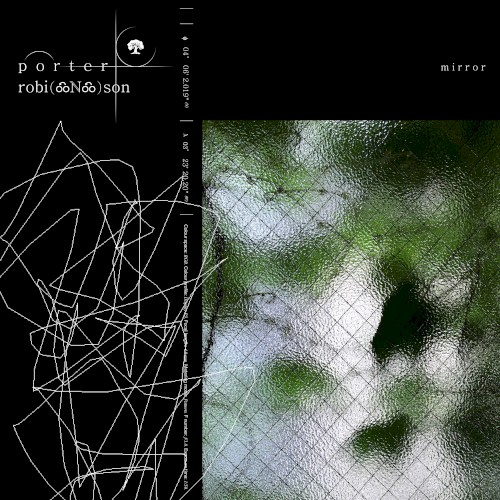
Mirror (2020) single artwork — tangled scribbles beside a speckled reflection. Whenever pressure piles up, especially in a semester short on time with an unfinished thesis sitting there, my head runs the same worn script: “How does everyone else seem to cruise right through while everything I write looks terrible?”
What I love about Mirror is how Porter pits two vocal layers against each other over bright synths. Instead of playing like a sad ballad, it feels like an argument with yourself.
“And it’s not the voice of all the others / You’ve only said it to yourself.”
— Porter Robinson, Mirror Thinking back on it, nobody outside ever tore into my work nearly as harshly as the voice I kept recording and replaying in my own head every night. (The worst part is there is no mute button on those speakers.)
-
11. Something Comforting: Following right after Mirror, this one trades natural vocals back and forth with high pitch-shifted harmonies from the opening bars. The chorus lifts hard enough that I kept hitting replay whenever my momentum dipped.
-
12. Blossom: Strips out the electronics completely and leaves just an acoustic guitar plus an unguarded confession for the person who stuck around through the worst stretch.
Act 4 (Tracks 13–14): Wide-open space on Unfold and the closer
-
13. Unfold (with Totally Enormous Extinct Dinosaurs) — The weight stays, you still changed:
If Mirror calls out that critical voice head-on, Unfold suddenly makes the entire record feel wider and more open.
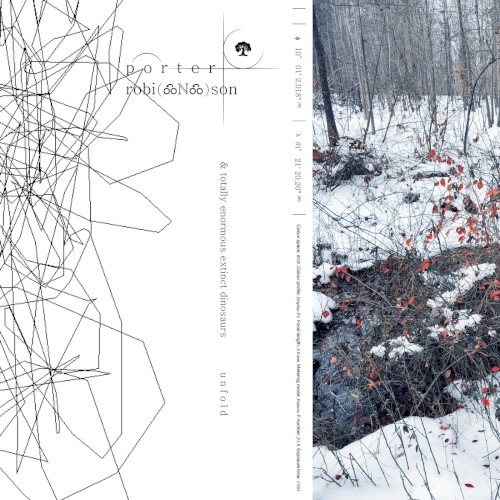
Unfold (2021) single artwork with TEED — winter woods broken up by red leaves. Right after the small acoustic guitar on Blossom, Porter and TEED swell the synths until they sound massive. Hearing “And I watched the water unfold / ‘Cause I’m not the same as I was / As I shoulder the weight of the world”, what I like most here is that it never pretends the pressure vanished.
The workload and deadlines sit right where they were. What hits is the follow-up line (“Do you see how you’ve grown? / Don’t be sorry, then”); it calls out the habit of feeling guilty just for moving slowly while exhausted.
Near the end, “Thaw your hands now / Put color in your cheeks / So be here with me” eases the tempo down cleanly to wrap that arc without overstaying its welcome.
-
14. Trying to Feel Alive: Skipping any triumphalist finale, the closing track coasts gently on unhurried vocals and lets the album wind down on a calm note.
What might take getting used to
Even though Nurture is one of the best uplifting records I have ever heard, two choices can throw off first-time listeners:
- Heavy pitch-shifted vocals: Porter raises his voice across plenty of tracks to act out a dialogue with himself. If you are not used to that vocal effect, the early songs can sound uncanny at first.
- Spiky glitch stretches: Wind Tempos and the opening half of dullscythe lean choppy and harsh. On days when you just want smooth background music while working, you will probably skip past those parts.
That thesis semester eventually ended, while the EDM habit I picked up from Nurture stuck around. Whenever new pressure hits and that familiar voice pipes up again, I still put Nurture on for a full listen to clear my head a bit.